
Reference Guide
Pest Library
What each pest we treat actually looks like, the signs it's established itself, why it's worth addressing, and what you can do yourself between professional visits.
Spiders
Identification
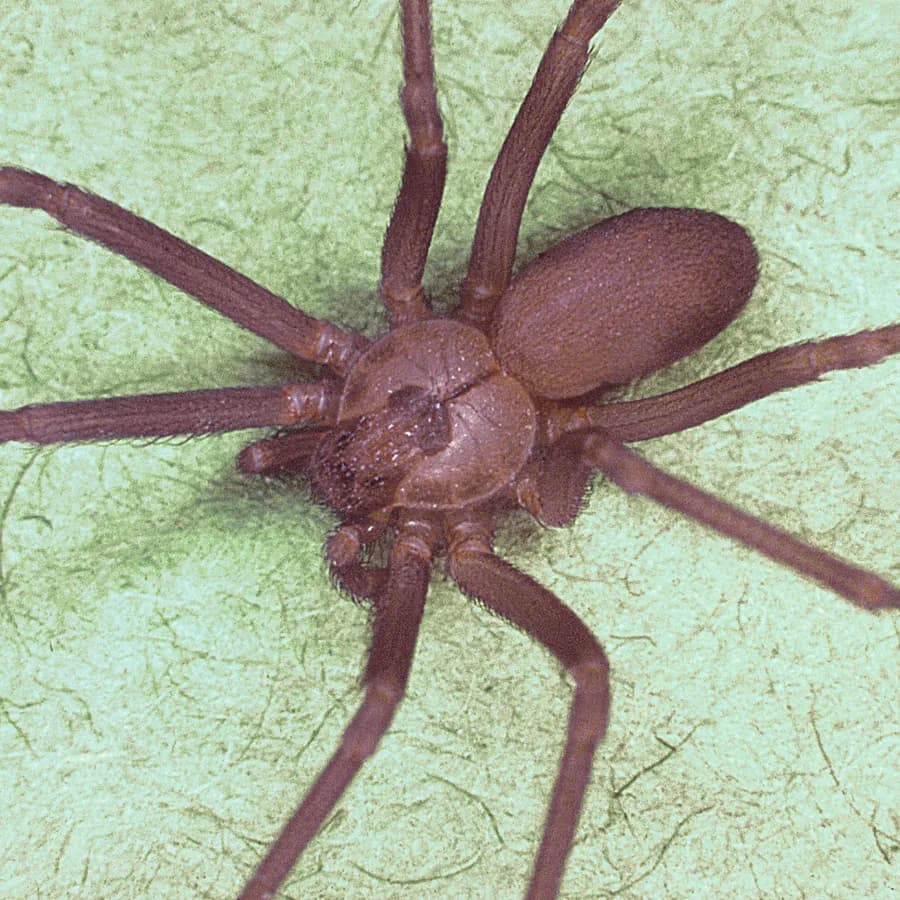
Most spiders found in and around Northwest Arkansas homes are harmless — common house spiders, wolf spiders, and cellar spiders. The one to actually watch for is the brown recluse: a medium-sized, soft-bodied spider a quarter to a half inch long, tan to dark brown, with a distinctive violin-shaped marking on its back.
Signs to Look For
Webs accumulating in corners, garages, and undisturbed storage areas; egg sacs tucked into closets or attic spaces; spiders showing up regularly rather than as an occasional one-off.
Why It's a Problem
Arkansas sits at the center of the brown recluse's established range, and the species is common in both urban and rural homes here. It's not aggressive and will usually retreat rather than confront, but a bite — typically from being trapped against skin in bedding or clothing — can cause a slow-healing wound.
Behavior & Habitat
Brown recluses favor dry, undisturbed spots: closets, attics, garages, behind furniture. They can survive six months or more without food or water, which is part of why they're so persistent once established.
What You Can Do Yourself
Reducing clutter in storage areas, shaking out stored clothing and shoes before wearing them, and sealing exterior gaps all help. Regular web removal keeps populations from building up, but a recurring presence — especially of recluses — is worth a professional inspection.
Cockroaches
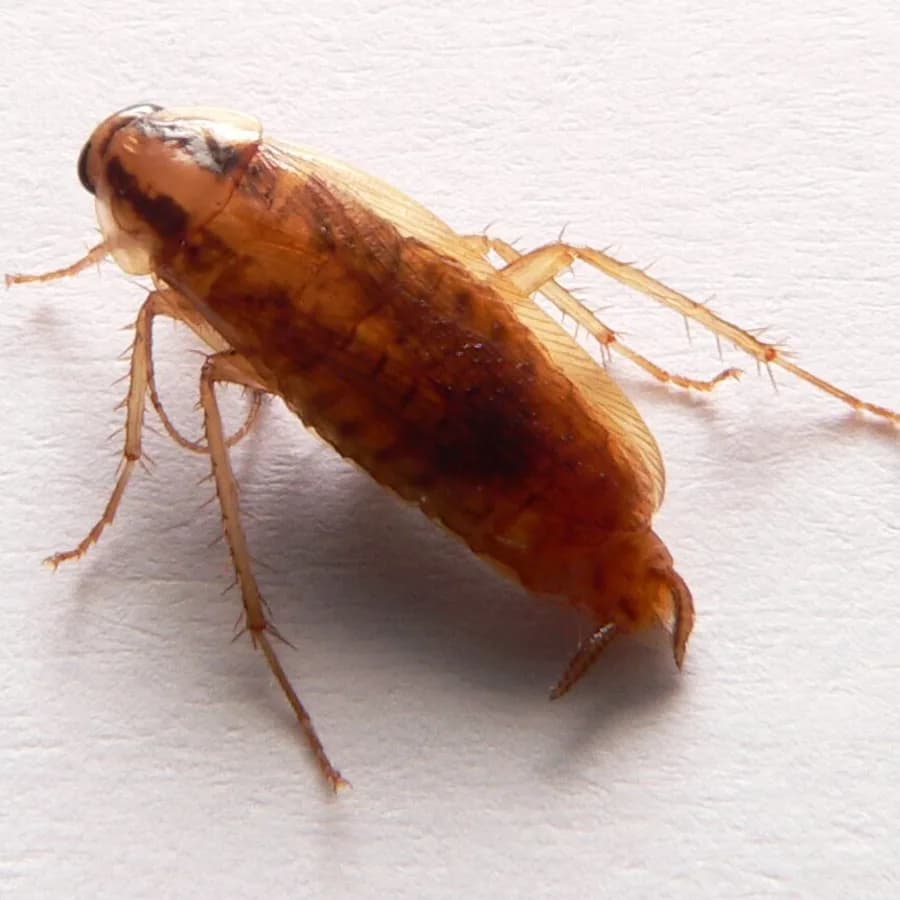
Photo: David Monniaux, CC BY-SA 3.0
Identification
German cockroaches (light brown, about half an inch) are the most common indoor species, typically found in kitchens and bathrooms. American cockroaches (larger, reddish-brown) tend to show up in basements, drains, and utility areas.
Signs to Look For
Roaches seen at night when lights come on, a musty odor in cabinets, small dark droppings along baseboards, and oval egg cases (oothecae) in drawers or behind appliances.
Why It's a Problem
Cockroaches contaminate food surfaces and can trigger allergies and asthma symptoms in sensitive individuals. They're nocturnal and hide well, so visible activity usually means a larger population than what's actually seen.
Behavior & Habitat
They're drawn to warmth, moisture, and any accessible food source — a dripping pipe or an unsealed pet food container is enough, regardless of overall household cleanliness. Activity is year-round indoors, not seasonal.
What You Can Do Yourself
Fixing leaks, sealing food in airtight containers, and cleaning up crumbs and grease reduce what draws them in. Over-the-counter baits can help with light activity, but an established population usually needs professional bait placement and follow-up to fully break the reproduction cycle.
Beetles
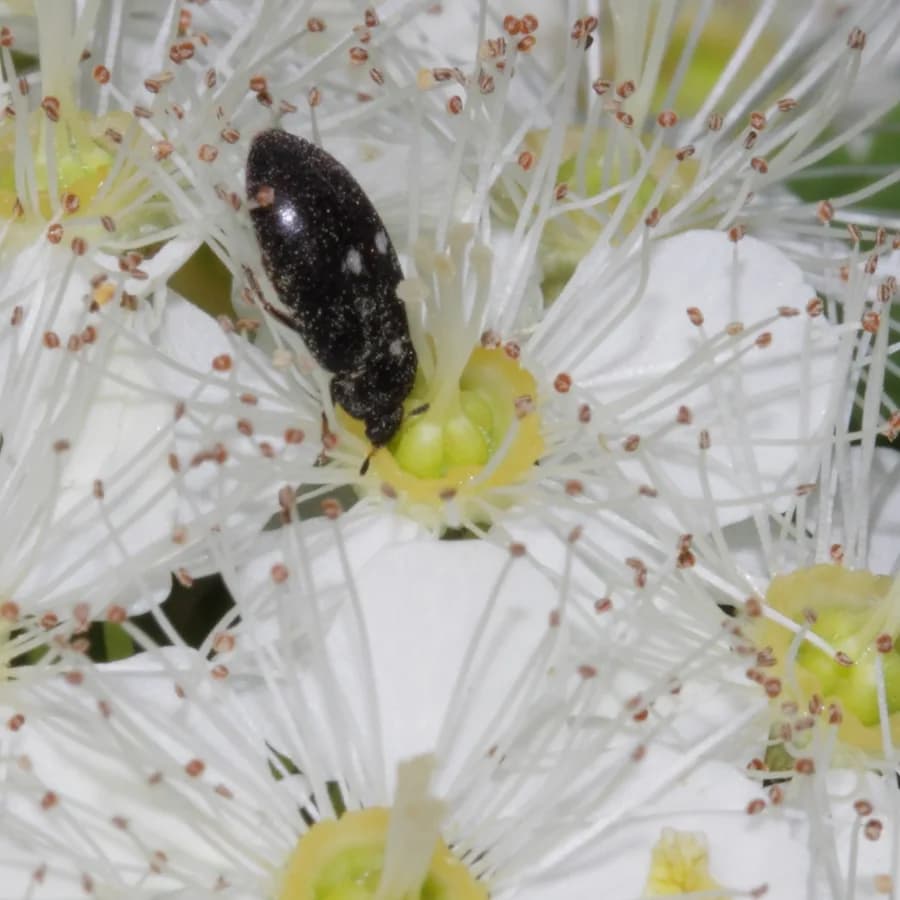
Photo: Guido Bohne, CC BY-SA 2.0
Identification
Two common types cause most household problems: pantry (grain) beetles, which infest stored dry food, and carpet beetles, small oval beetles that feed on wool, silk, fur, and other natural fibers.
Signs to Look For
Small holes or larvae in pantry packaging; damage to wool clothing, carpet, or upholstery; shed larval skins collecting near windowsills or baseboards.
Why It's a Problem
Beetle damage is usually traceable to one specific source — a particular food item or fabric — but left unaddressed it spreads to nearby stored items.
Behavior & Habitat
Carpet beetle larvae are drawn to natural fibers and can go unnoticed for months in undisturbed storage. Pantry beetles typically arrive already inside packaged dry goods and spread from there.
What You Can Do Yourself
Inspect and discard infested pantry items promptly, store dry goods in sealed containers, and vacuum and rotate stored fabrics regularly. Recurring activity after cleanup usually means the original source wasn't fully identified.
Mosquitoes
Identification
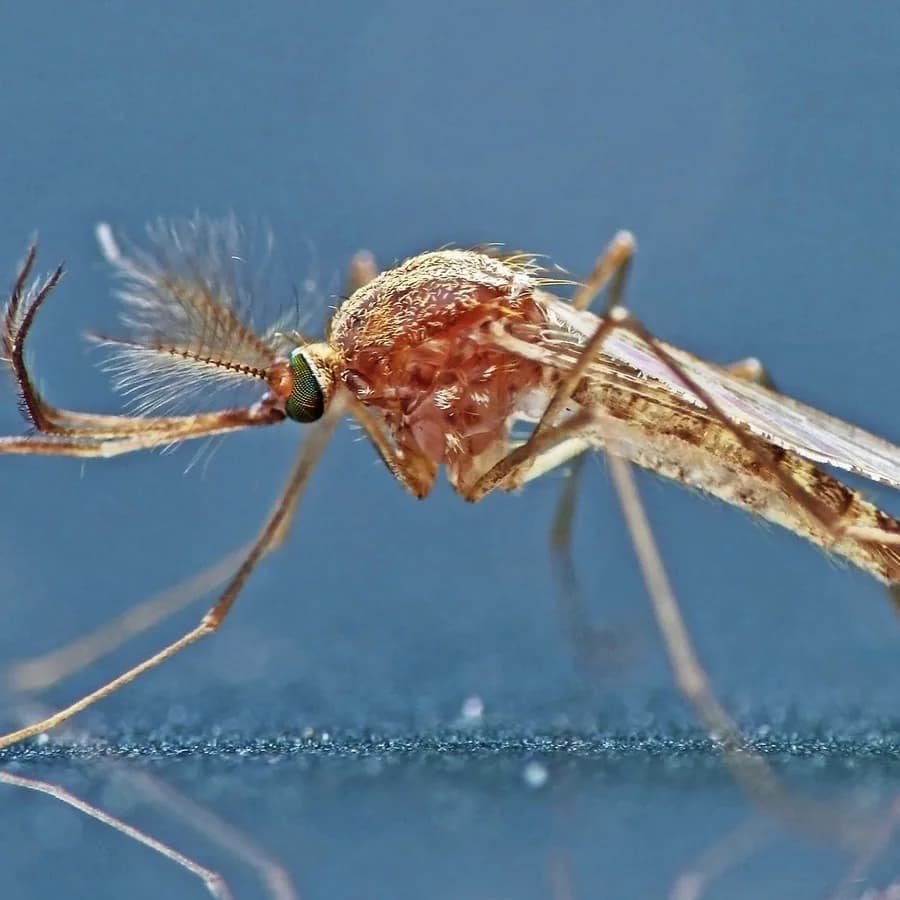
Small flying insects recognizable by their long legs, narrow wings, and biting proboscis. Only females bite, since they need a blood meal to lay eggs.
Signs to Look For
Bites accumulating despite repellent use, mosquito activity heavy enough to limit evening outdoor time, and standing water anywhere on the property.
Why It's a Problem
Beyond the nuisance of bites, mosquitoes are a well-documented disease vector in many regions, and populations can rebuild quickly from even small amounts of standing water.
Behavior & Habitat
Mosquitoes rest in shaded vegetation — shrubs, tall grass — between feedings, and breed in any standing water, from birdbaths to clogged gutters. Activity in Arkansas typically runs spring through fall as temperatures and humidity rise.
What You Can Do Yourself
Empty standing water weekly, keep grass and shrubs trimmed to reduce resting spots, and repair or screen gutters. Because mosquitoes travel in from neighboring properties, DIY yard maintenance helps but rarely eliminates activity on its own.
Ticks
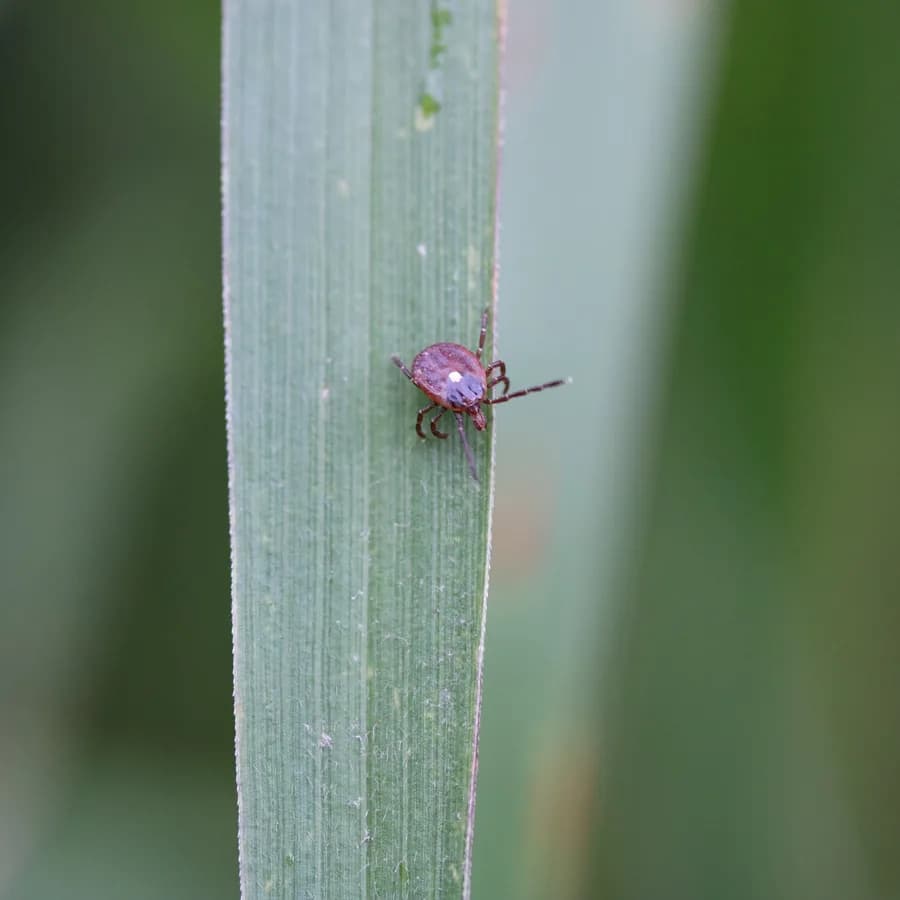
Photo: NIAID (National Institute of Allergy and Infectious Diseases), CC BY 2.0
Identification
Small, flat-bodied arachnids that range from poppy-seed-sized (nymphs) to a pea size when engorged after feeding. They don't jump or fly — they wait on grass or brush and latch onto a passing host.
Signs to Look For
Ticks found on pets after time outdoors, activity concentrated near tall grass, brush, or wooded yard edges, or a family member finding an attached tick.
Why It's a Problem
Ticks in the U.S. can carry Lyme disease, Rocky Mountain spotted fever, ehrlichiosis, and other illnesses. The CDC recommends removing an attached tick within 24 hours, since that window meaningfully reduces disease transmission risk.
Behavior & Habitat
Ticks are most active in spring, summer, and fall, and stay in vegetation at the edges of lawns rather than roaming across open yard — they wait for a host to brush past rather than actively hunting.
What You Can Do Yourself
Keep grass mowed short and clear brush at yard edges, since that removes the waiting spots ticks rely on. Check pets and family members after time outdoors, and remove any attached tick promptly with fine-tipped tweezers, pulling straight up without twisting.
Ants
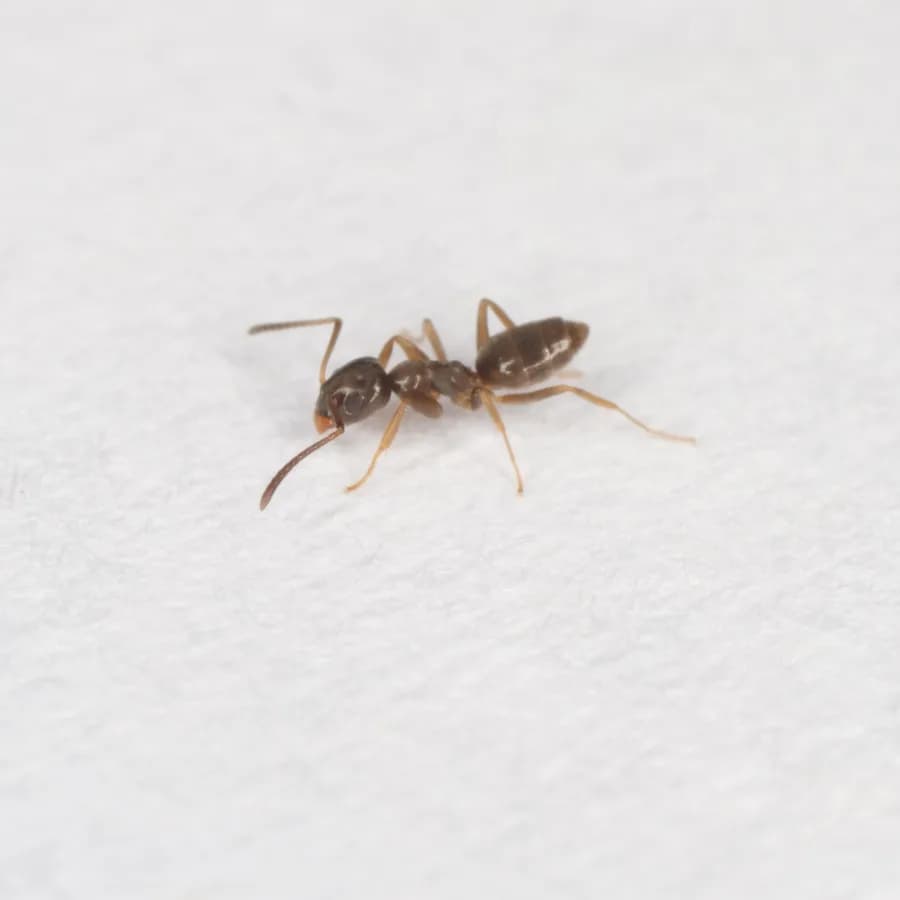
Photo: Brian Gratwicke, CC BY 2.0
Identification
Common species locally include odorous house ants (dark, emit a rotten smell when crushed), carpenter ants (larger, black, nest in wood), and pavement ants (small, dark brown, nest under sidewalks and slabs).
Signs to Look For
Visible trails leading to a food or water source, small dirt piles near foundation cracks or slab edges, and ants reappearing in the same spot despite repeated cleaning.
Why It's a Problem
Beyond contaminating food, carpenter ants specifically can cause structural damage over time by nesting in moisture-softened wood, distinct from termite damage but worth taking seriously.
Behavior & Habitat
Ants forage along scent trails from the nest to a food source; killing the ants visible on that trail does nothing to the colony itself, which can number in the thousands and simply sends out new foragers.
What You Can Do Yourself
Wipe down trails to disrupt the scent path, seal food sources, and address moisture issues that attract carpenter ants. Bait stations (not contact sprays) are more effective for DIY control since ants carry bait back to the colony — persistent trails after baiting suggest the nest wasn't reached.
Rodents
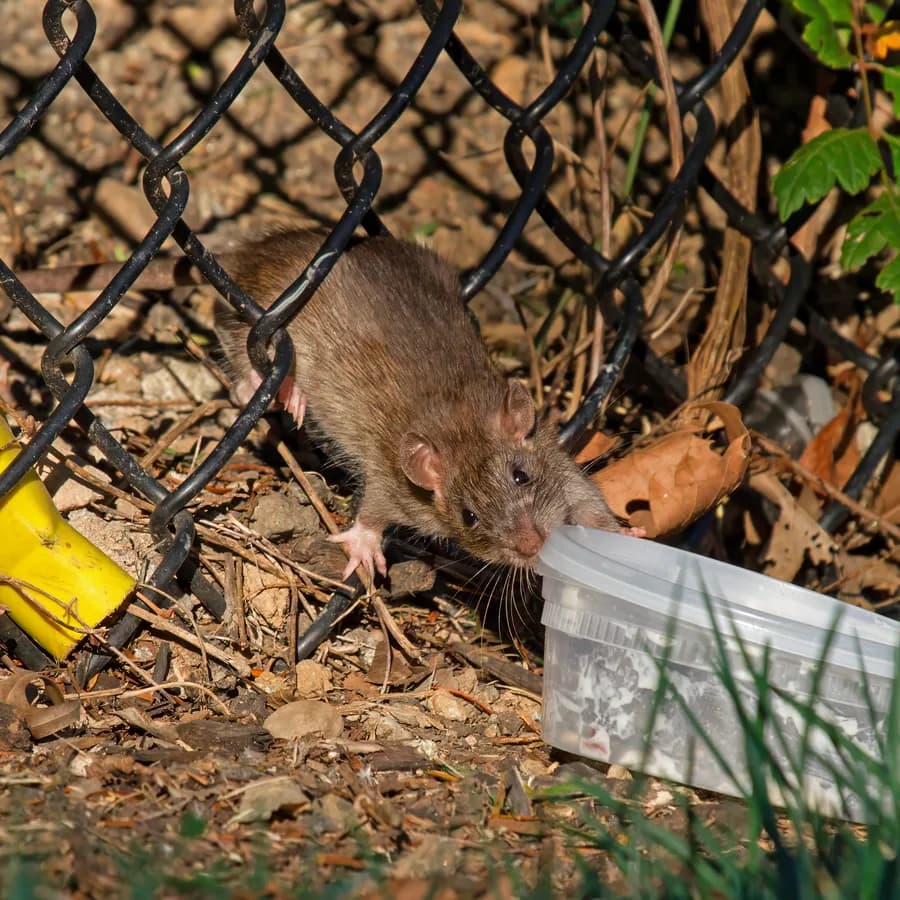
Photo: Chuck Homler / Focus On Wildlife, CC BY-SA 4.0
Identification
House mice (small, gray-brown, pointed nose) and roof/Norway rats (larger, blunter features) are the two most common species entering homes in the region.
Signs to Look For
Droppings in cabinets or along baseboards, gnaw marks on food packaging or wiring, and scratching sounds in walls or ceilings, especially at night.
Why It's a Problem
Rodents contaminate food and surfaces, can carry disease, and gnaw on electrical wiring — a recognized fire risk when nests form inside walls or attics.
Behavior & Habitat
Rodents seek warmth and shelter most aggressively as outdoor temperatures drop in fall, and can enter through gaps as small as a quarter-inch (mice) or half-inch (rats).
What You Can Do Yourself
Seal visible exterior gaps, especially around utility line entry points and the roofline, and store food (including pet food) in sealed containers. Traps address existing activity, but without sealing the entry point used to get in, new rodents typically find the same gap.
Stink Bugs
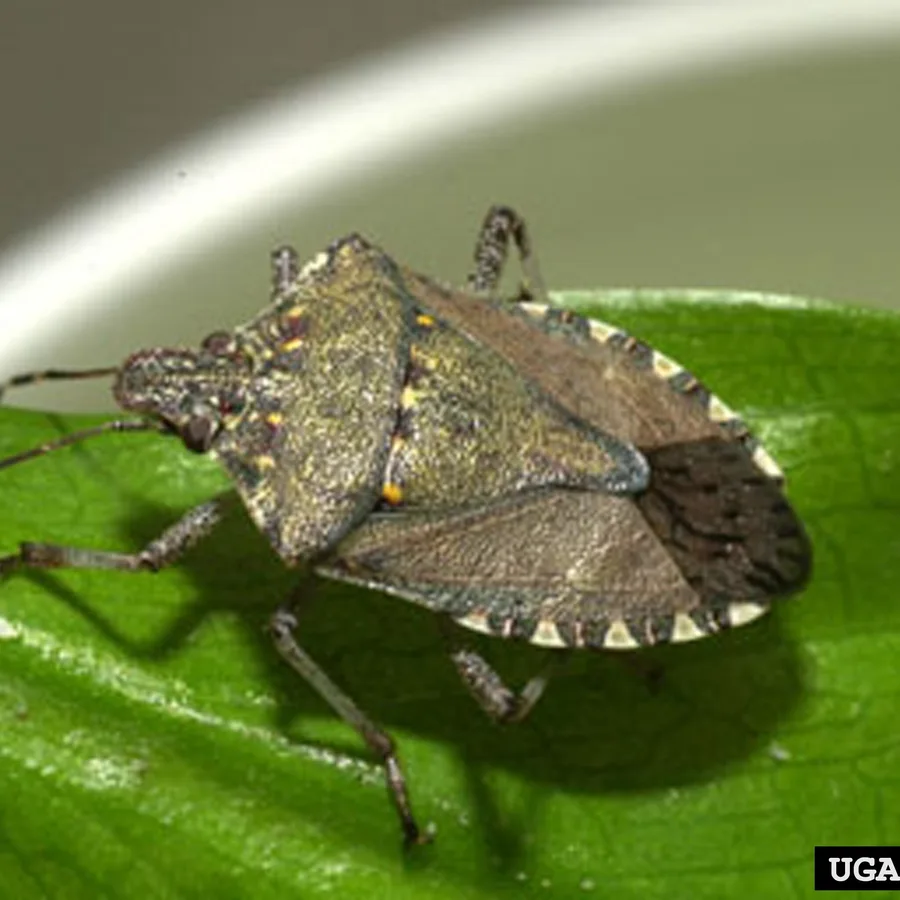
Photo: David R. Lance, USDA APHIS PPQ, CC BY 3.0 US
Identification
The brown marmorated stink bug — an invasive species first confirmed in Arkansas in Washington County in 2013 — is shield-shaped, mottled brown, about half an inch to five-eighths of an inch long, with distinctive banded antennae.
Signs to Look For
Bugs clustering on sunny, south-facing exterior walls in fall, and appearing indoors around windows, attic vents, or door frames as the weather cools.
Why It's a Problem
Stink bugs aren't harmful to people or pets, but large numbers sheltering indoors over winter are a persistent nuisance, and disturbing or crushing them releases a strong, unpleasant odor — in established areas of the eastern U.S., tens of thousands have been found overwintering in a single home.
Behavior & Habitat
As temperatures drop, adults seek sheltered overwintering spots, staging on sun-warmed exterior walls before working through small gaps into wall voids and attics. Northwest Arkansas populations, while newer than in some states, have become an increasingly reported fall nuisance.
What You Can Do Yourself
Seal exterior gaps around windows, doors, and utility penetrations before fall. If bugs are already inside, vacuum them up rather than crushing them to avoid the odor, and empty the vacuum outside promptly.
Bed Bugs
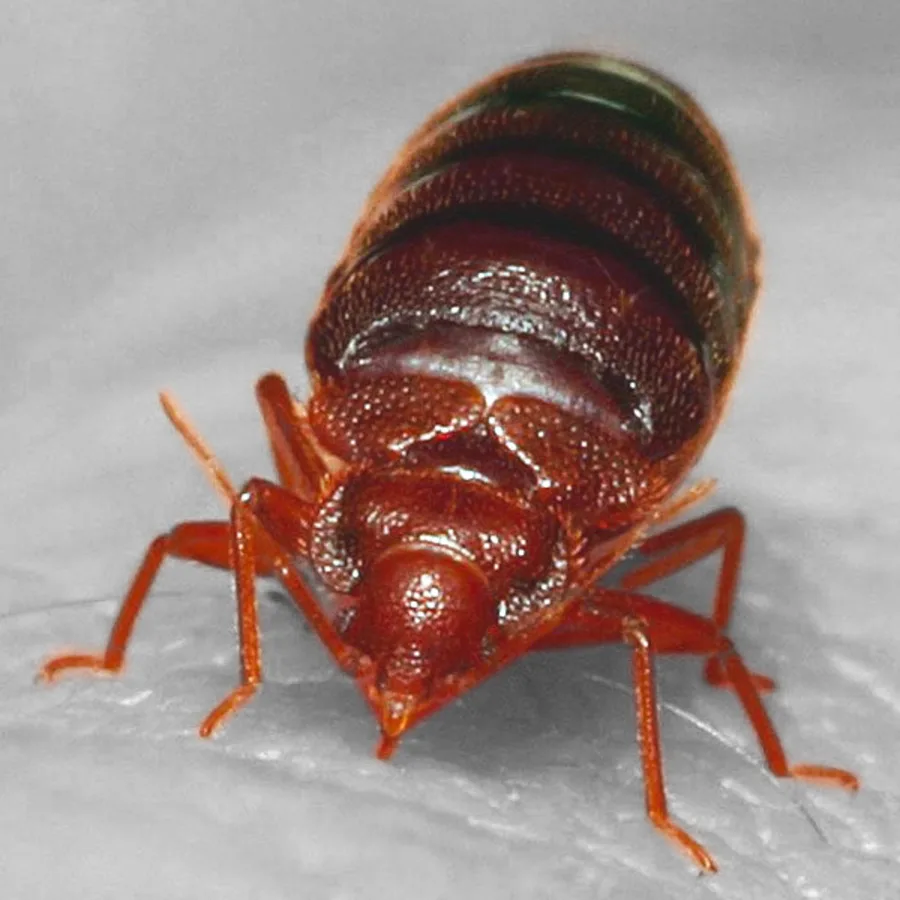
Photo: AJC1, CC BY-SA 2.0
Identification
Small, flat, reddish-brown, wingless insects roughly the size of an apple seed. They feed on blood while people sleep and can survive several months between meals.
Signs to Look For
Rusty or reddish stains on sheets from crushed bugs, small dark excrement spots that bleed into fabric like a marker, and shed pale-yellow skins near mattress seams — bites alone are an unreliable indicator on their own.
Why It's a Problem
Bed bugs don't spread disease, but bites can cause itching, lost sleep, and occasionally allergic reactions — and infestations spread easily between rooms or neighboring units if not addressed thoroughly.
Behavior & Habitat
They hide in mattress seams, bed frame joints, and any crack that could hold a credit card, emerging at night to feed. They spread by hitchhiking in luggage, secondhand furniture, and clothing — not by flying or jumping.
What You Can Do Yourself
Wash and dry bedding on high heat, vacuum mattress seams and surrounding areas thoroughly, and inspect secondhand furniture before bringing it inside. Store-bought sprays rarely reach every hiding spot or egg, which is enough for an infestation to rebound — a thorough inspection is usually needed to fully resolve one.
Termites
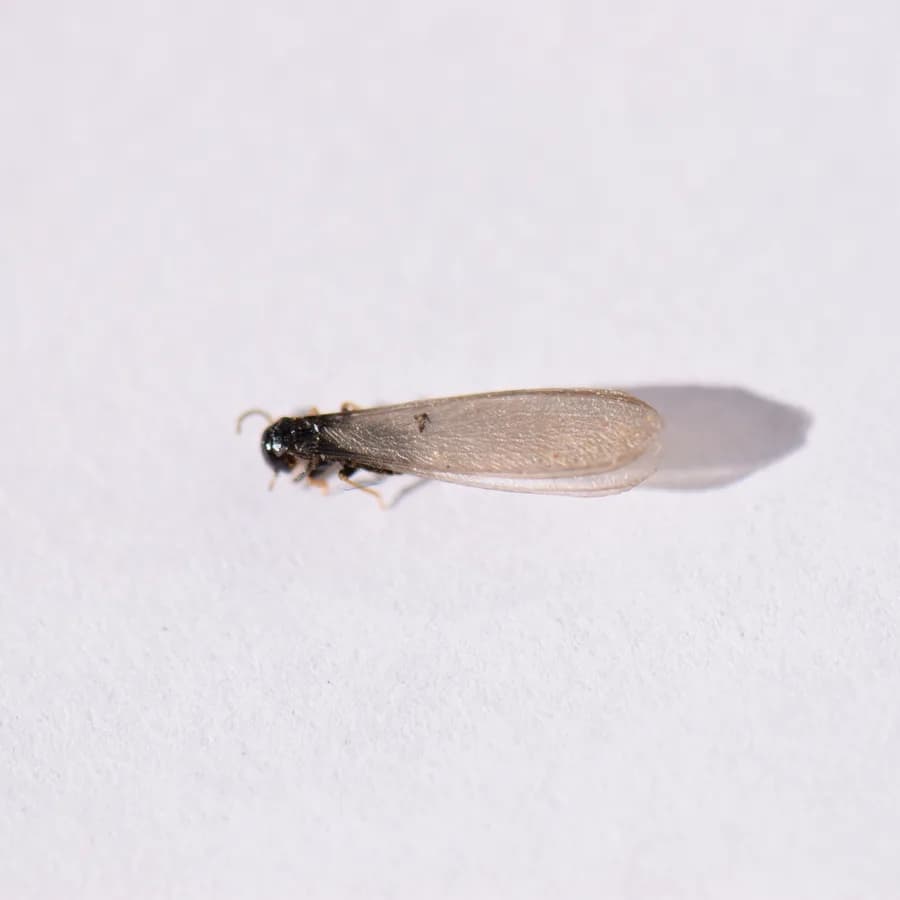
Photo: PumpkinSky, CC BY-SA 4.0
Identification
Subterranean termites — the species that matters most in Arkansas — are small, pale, soft-bodied insects that live in underground colonies. Winged swarmers (dark, about 3/8 inch, with two pairs of equal-length wings) are usually the first ones people actually see.
Signs to Look For
Pencil-thin mud tubes along the foundation or crawlspace piers, discarded wings near windows or doors after a swarm, and wood that sounds hollow or looks bubbled/sunken when tapped.
Why It's a Problem
Termite damage happens out of sight — inside walls, under flooring, below slabs — and can go unnoticed for months or years before symptoms like sagging floors or jammed doors appear, by which point repair costs are often significant.
Behavior & Habitat
Subterranean termites swarm most heavily in spring and summer, especially on warm days after rain, as colonies send out winged reproductives to start new colonies nearby. Between swarms, they stay hidden in soil and wood, building mud tubes to travel between the two while staying protected from open air.
What You Can Do Yourself
Keep mulch and wood-to-soil contact away from the foundation, fix drainage issues that keep soil damp near the house, and check exposed foundation and crawlspace areas periodically for mud tubes. Because damage is largely invisible until it's advanced, DIY monitoring is a supplement to — not a replacement for — periodic professional inspection.
Sources
- CDC — About Ticks and Tickborne Disease
- University of Arkansas Division of Agriculture — Brown Marmorated Stink Bug
- University of Arkansas Cooperative Extension — Brown Recluse Spiders
- EPA — How to Find Bed Bugs
- CDC — About Bed Bugs
- Adams Pest Control — Identifying and Preventing Subterranean Termite Damage in Arkansas